Uncover the extraordinary vision and strategic brilliance that transformed Alexander the Great from a young prince into one of history’s most legendary conquerors. His relentless ambition drove him to challenge the boundaries of the ancient world, blending military innovation with cultural synthesis to forge a sprawling empire that reshaped civilizations. This captivating narrative explores his daring campaigns, adaptive tactics, and charismatic leadership that inspired unwavering loyalty amid adversity. Yet, beneath the triumphs lies a cautionary tale: his overreach and lack of sustainable governance ultimately fragmented his empire. What can modern leaders learn from his boldness, adaptability, and ability to influence diverse peoples? As we delve into Alexander’s layered worldview—where conquest met cultural engagement—we are prompted to consider how legacy endures and what lasting impact true visionary leadership can leave behind amid the complexities of change and ambition.
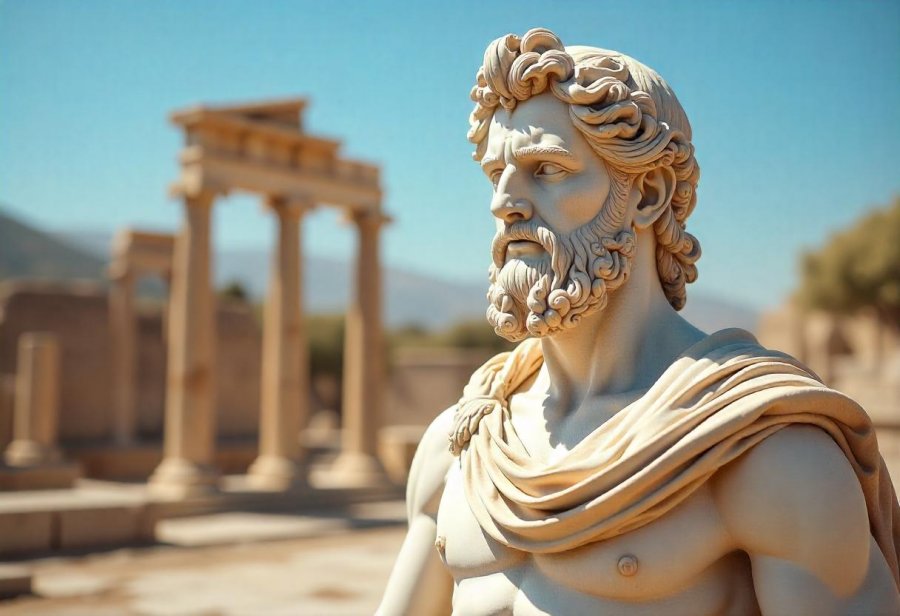
Unveiling the Legend of Alexander the Great: A Visionary Conqueror’s Legacy
Alexander the Great stands as one of history’s most captivating and enduring figures, embodying the archetype of the visionary conqueror. His reputation is forged not solely by the vastness of his military campaigns but equally by his innovative strategies and exceptional leadership qualities that transformed the ancient world. Emerging from the Macedonian court in the 4th century BCE, Alexander inherited a kingdom that, under his father Philip II, was rapidly cultivating a formidable military reputation. What elevates Alexander’s significance is his ability to elevate Macedonian ambitions into a sweeping, transformative vision—one that reshaped civilizations and left an indelible mark on history.
His influence extends well beyond the battlefield; he fundamentally altered the political and cultural landscape of Eurasia. His campaigns broke traditional boundaries, blending military prowess with a desire for cultural synthesis that aimed to unite diverse peoples under a shared vision. This was no mere quest for territorial expansion; it was driven by a profound ambition to create a cosmopolitan empire—one built on the ideals of unity through conquest and cultural exchange. Alexander demonstrated a rare combination of strategic brilliance, personal charisma, and relentless determination—traits that elevated him from a regional prince to a legendary figure whose legacy persists across millennia.
Understanding Alexander’s importance requires examining the leadership qualities and worldview that shaped his approach. From a young age, he was immersed in Greek ideals of heroism, philosophy, and warfare—lessons partly facilitated by Aristotle himself. This intellectual foundation, paired with Macedonia’s strategic position on the fringes of the Persian Empire, fostered a mindset geared toward expansion and cultural engagement. His early military experiences, alongside his education, cultivated a leader who saw conquest not merely as territorial gain but as an opportunity for cultural diffusion and innovation.
The remarkable success of Alexander’s campaigns reveals a leader whose mastery of strategy was as daring as it was meticulous. His approach to warfare was revolutionary, blending innovative tactics with a keen understanding of terrain, logistics, and psychological warfare. Whether crossing treacherous mountain passes, conducting rapid night marches, or executing complex flanking maneuvers, Alexander’s ingenuity kept enemies off balance and often overwhelmed them before response was possible. His adaptability across diverse environments—from the deserts of Persia to the jungles of India—demonstrates a strategic flexibility that continues to be studied centuries later. This combination of innovation and boldness made him a force capable of reshaping the geopolitical map.
Yet, Alexander’s legacy is not confined solely to military brilliance. It also encompasses the cultural and political transformations his conquests initiated. His efforts at cultural synthesis—founding cities, spreading Greek language and ideas, and fusing customs—laid the groundwork for a cosmopolitan empire that influenced subsequent civilizations. While his empire fragmented shortly after his death, the ideas and structures he pioneered persisted, inspiring future military leaders and rulers who sought to emulate his vision of unity through conquest and cultural integration.
Context is everything here: Alexander’s rise was made possible by a confluence of factors—Macedonia’s military reforms, his education, and the geopolitical landscape of a declining Greek city-state system overshadowed by Persia’s might. Macedon’s transformation from a peripheral kingdom to a regional hegemon under Philip II created a stable platform for Alexander’s ambitions. His early military experiences, such as participating in the Battle of Chaeronea, demonstrated the effectiveness of Macedonian reforms and solidified his belief in strategic innovation. The environment of fragmentation and opportunity—Greek internecine conflicts alongside Persia’s vast empire—created the perfect storm for his expansionist ambitions.
The strategic position of Macedonia, bordering the Persian Empire and situated at the crossroads of Greek and Eastern civilizations, both inspired and challenged Alexander. Growing up amidst tensions and ambitions, he internalized a worldview emphasizing military strength, cultural exchange, and the importance of seizing opportunities. His education under Aristotle complemented this outlook, fostering a love for learning and philosophy that he later pursued through the dissemination of Greek culture across his empire. His early military campaigns, marked by disciplined troop movements and tactical innovations, laid a foundation for his later conquests.
Finally, understanding Alexander’s significance involves recognizing the layered complexity of his character and his times. He was not merely a conqueror driven by personal ambition but a leader shaped by a unique confluence of cultural influences, strategic insight, and vision. His legacy challenges us to consider the intricate dynamics of empire-building—how military innovation, cultural synthesis, and personal charisma intertwine to forge lasting change. As we explore his life and campaigns, we see a figure whose influence continues to resonate, prompting reflection on the nature of leadership, ambition, and the transformative power of vision.
Foundations of Ambition: The Environment and Roots That Shaped Alexander
The environment in which Alexander the Great emerged was shaped by a confluence of political, military, and cultural forces that would leave a lasting imprint on his ambitions and strategic outlook. Macedonia, at the dawn of the fourth century BCE, occupied a somewhat peripheral position within the Greek world—often considered a frontier region rather than a central hub of influence. Yet, under Philip II, Macedonia was transforming rapidly. His military reforms, especially the development of the Macedonian phalanx, fundamentally reshaped the kingdom’s capacity for warfare, positioning Macedonia as a rising power capable of challenging the traditional city-states of Greece and extending its influence beyond its borders. These reforms signified more than tactical shifts; they embodied a broader strategic vision aimed at elevating Macedonia from regional prominence to a dominant force in the ancient world.
From a young age, Alexander was immersed in this dynamic environment that fostered both ambition and a sense of destiny. His education combined the best of Greek ideals—heroism, excellence, philosophy, and warfare—and was partly facilitated by Aristotle himself. This intellectual grounding provided him with a comprehensive worldview, blending philosophical inquiry with practical strategy. It also instilled in him a love for learning and critical thinking, qualities that would later underpin his innovative approach to conquest. Macedonia’s strategic position on the fringes of the Persian Empire further amplified his sense of opportunity. Surrounded by the tumult of Greek city-states, many of which were embroiled in internal disputes, Macedonia’s proximity to Persia’s vast wealth and power created a fertile ground for expansion and influence.
The geopolitical landscape of the late Classical period was one of flux—interstate rivalries, shifting alliances, and the gradual decline of Greek city-states’ unity. Macedon, under Philip, capitalized on this chaos, leveraging diplomacy, strategic alliances, and military might to carve out a larger sphere of influence. The fragmentation of Greece, often marked by internecine conflicts, left the city-states weaker and more vulnerable to external threats. Philip’s success in unifying Macedonia and asserting dominance over Greece laid a stable foundation for Alexander’s future campaigns. The Macedonian rise was not accidental but the result of deliberate reforms and calculated diplomacy, which provided Alexander with a secure platform from which to launch his ambitions.
Alexander’s early military experiences proved instrumental in shaping his strategic mindset. Traveling with Philip on various campaigns, he gained firsthand knowledge of complex warfare, logistics, and leadership under fire. One pivotal moment was his participation in the Battle of Chaeronea, fought when he was just eighteen. This victory over a coalition of Greek city-states not only demonstrated the effectiveness of Macedonian reforms but also cemented Alexander’s belief in the power of strategic innovation. These formative experiences underscored the importance of discipline, swift decision-making, and adaptability—traits that would become hallmarks of his later conquests. Growing up amid tensions and ambitions, he internalized the importance of seizing opportunities swiftly and confidently.
The influence of Greek culture and military tradition on Alexander was profound. His education under Aristotle fostered a deep appreciation for Greek philosophy, art, and scientific inquiry, which he later sought to spread across his empire. Yet, this education also carried an element of Greek superiority, justifying his expansion into Persia and beyond as a mission to bring Greek civilization to the “barbarians.” Macedonian military innovations—such as combined infantry and cavalry tactics—were rooted in a tradition that valued adaptability and innovation. This fusion of Greek cultural ideals with Macedonian military ingenuity gave Alexander a distinctive strategic edge. It enabled him to craft campaigns that others might have deemed impossible, blending cultural ambition with military prowess to forge a new kind of empire.
In the end, Alexander’s rise was not merely a product of chance but the result of a layered environment that cultivated his ambitions. Macedonia’s transformation from a peripheral kingdom into a regional hegemon was driven by Philip’s reforms, a strategic geographic position, and a complex cultural landscape. The early military experiences, combined with his wide-ranging education and the influence of Greek ideals, created a leader uniquely prepared to seize the opportunities before him. His environment was a crucible of change—full of risks, prospects, and the potential for revolutionary action. It was here that Alexander’s layered worldview took shape, setting the stage for a series of conquests that would redefine empire-building forever.

Modern Strategies in Leadership and Warfare Echoes of Alexander’s Timeless Wisdom
In today’s complex and rapidly shifting landscape, the strategies of Alexander the Great resonate far beyond the ancient battlefield, offering timeless lessons for leadership and organizational agility. Modern military strategists and business leaders alike draw on his example of daring decision-making, especially his capacity to adapt swiftly to unfamiliar and unpredictable environments. His emphasis on rapid, decisive action—whether navigating treacherous mountain passes or executing intricate flanking maneuvers—embodies qualities that are increasingly vital in an era characterized by constant change and uncertainty. The core principles of boldness, flexibility, and strategic innovation continue to inspire those seeking to outmaneuver competitors and turn challenges into opportunities.
While the tactical contexts have evolved dramatically, the essence of Alexander’s leadership—his daring spirit and adaptability—remains remarkably relevant. Today’s interconnected world, riddled with technological advancements, diplomatic sensitivities, and rapid information flows, complicates straightforward application of ancient tactics. Yet, the underlying mindset of seizing fleeting opportunities with confidence and adjusting plans on the fly remains central. Leaders who cultivate these qualities can better navigate crises, inspire their teams, and maintain a competitive edge. The ability to pivot quickly without losing sight of overarching goals—a hallmark of Alexander’s campaigns—serves as a vital lesson for contemporary decision-makers.
The importance of cultural synthesis, a hallmark of Alexander’s legacy, finds a modern echo in the realm of global leadership. His recognition that sustainable influence depends not solely on military might but on understanding and integrating diverse customs and ideas resonates today. In multinational corporations and diplomatic arenas, cultural intelligence and inclusivity are now seen as forms of soft power that foster loyalty and cooperation. Just as Alexander founded cities and promoted intermarriage to embed Greek influence, contemporary leaders foster shared values and mutual respect across cultural divides. This approach, rooted in understanding rather than dominance, creates lasting influence that endures beyond immediate gains.
Logistics and operational planning, often overlooked in popular narratives, exemplify how Alexander’s innovations continue to inform modern strategies. His ability to coordinate complex troop movements across vast terrains—without the benefit of modern technology—demonstrates a mastery of meticulous preparation and resource management. Today, advancements such as real-time data analytics, digital communications, and autonomous systems serve as the evolution of these principles, enabling military and corporate operations to be orchestrated with unprecedented precision. The lesson remains clear: innovation and adaptability in planning are essential for maintaining a strategic advantage.
Psychological influence and morale, integral to Alexander’s leadership style, underscore the importance of emotional intelligence in today’s leadership models. His personal charisma, showmanship, and unwavering confidence inspired loyalty among his followers and unsettled opponents alike. He understood that motivating the mind could be as powerful as commanding the sword. In contemporary contexts, building trust, inspiring shared purpose, and demonstrating authentic integrity are now recognized as critical components of effective leadership. The emotional connection leaders forge with their teams can determine resilience and sustained success amid adversity.
Alexander’s capacity for strategic agility—his talent for responding dynamically to battlefield conditions—serves as a blueprint for organizations facing rapid technological and geopolitical shifts. His refusal to rigidly adhere to predetermined plans, instead responding flexibly to evolving circumstances, allowed him to capitalize on fleeting opportunities. Today’s leaders leverage digital tools and intelligence-sharing platforms to emulate this improvisation, orchestrating complex operations with agility and purpose. The overarching message is that resilience and responsiveness, paired with strategic coherence, remain the hallmarks of successful leadership in an unpredictable world.
Finally, Alexander’s mastery of influence, rooted in both military prowess and cultural engagement, offers a profound lesson: sustainability depends on building trust and fostering collaboration. His efforts to establish cities, promote intermarriage, and respect local traditions created a sense of shared purpose that helped maintain stability within his empire. Modern leaders recognize that influence rooted in genuine relationships and mutual respect fosters loyalty and enduring alliances. Whether through corporate social responsibility initiatives or diplomatic engagement, the ability to blend strength with sensitivity determines long-term success. Alexander’s example reminds us that true influence transcends mere power—it is cultivated through authentic connection and shared values.
Mastering Influence: Lessons from Alexander’s Visionary Leadership and Cultural Integration
Alexander’s leadership exemplifies a rare blend of daring vision and meticulous execution that continues to resonate across centuries. His willingness to make bold decisions—whether launching nighttime marches into enemy territory or executing complex flanking tactics—demonstrates that true leadership often hinges on embracing calculated risks. Leaders today can draw inspiration from his fearless spirit, understanding that innovation and boldness frequently require stepping into the unknown and challenging conventional wisdom. This readiness to take decisive action underpins much of his enduring legend and offers a compelling lesson for contemporary leadership in any field.
Yet, daring alone cannot sustain success. Alexander’s campaigns reveal that strategic planning, grounded in detailed reconnaissance and resource management, are equally vital. His ability to prepare thoroughly, anticipate challenges, and adapt swiftly to evolving circumstances transformed daring ideas into tangible results. Modern leaders can emulate this by emphasizing deliberate groundwork, harnessing data-driven insights, and maintaining flexibility in execution. The most effective leaders combine bold ambitions with the discipline to implement them carefully, ensuring their visions translate into lasting achievements rather than fleeting victories.
A cornerstone of Alexander’s influence was his talent for inspiring loyalty through personal charisma and unwavering conviction. His capacity to articulate a compelling vision—a unified empire built on conquest and cultural integration—fostered a sense of shared purpose among his followers. This emotional connection, rooted in authenticity and trust, galvanized his troops to endure hardships and push beyond their limits. Contemporary leaders understand that inspiring trust and confidence can be as crucial as strategic acumen. Building genuine relationships, demonstrating integrity, and communicating a clear, compelling purpose are essential tools for motivating teams and sustaining resilience in challenging times.
Cultural sensitivity and adaptability also played a crucial role in Alexander’s leadership style. He recognized that influence extends beyond military prowess; it depends on forging authentic connections across diverse populations. His efforts to establish cities, promote intermarriage, and respect local customs helped embed Greek influence and foster loyalty within his expanding empire. Modern leadership echoes this approach through fostering inclusivity and understanding, knowing that long-term influence relies on shared values and mutual respect. Leaders who prioritize cultural intelligence and genuine engagement create a foundation for stability and enduring trust, much like Alexander’s strategy of blending strength with respect.
Flexibility and nimbleness on the battlefield, hallmarks of Alexander’s campaigns, remain vital in today’s fast-changing environment. His refusal to rigidly adhere to predetermined plans allowed him to respond dynamically to unforeseen challenges, turning potential setbacks into opportunities. This capacity for improvisation, paired with a clear overarching goal, kept him ahead of adversaries and enabled swift exploitation of emerging situations. Modern organizations—whether military, corporate, or diplomatic—must foster this same agility. Embracing the ability to pivot quickly, without losing sight of strategic objectives, ensures resilience amid technological advances and geopolitical shifts.
The psychological dimension of Alexander’s leadership—his mastery of morale and emotional influence—offers a profound lesson. His personal bravery, showmanship, and confidence inspired unwavering loyalty among his followers and unsettled opponents. He understood that motivating the mind could be as powerful as commanding the sword. Today’s leaders recognize that authentic influence built on emotional intelligence, trust, and shared purpose fosters resilience and long-term commitment. Cultivating a sense of shared identity, demonstrating empathy, and leading with integrity are strategies that continue to forge lasting bonds and inspire peak performance.
Finally, Alexander’s life underscores the importance of balancing ambition with prudence. His relentless pursuit of expansion stretched his forces thin and led to the fragmentation of his empire. His failure to establish sustainable governance highlights a fundamental truth: conquest is only the beginning. Long-term influence depends on effective administration, cultural integration, and the development of networks that transcend military victory. Modern leaders can learn that visionary ambition must be paired with strategic patience and humility. Success is not merely about achieving grand goals but nurturing the foundations that sustain them over time, ensuring that the legacy of leadership endures beyond the immediate moment.

Reflections on a Legendary Leader: Key Lessons and Lasting Impact of Alexander the Great
Alexander’s strategic genius and relentless ambition have left an indelible mark on history, vividly illustrating how visionary leadership combined with innovative tactics can reshape civilizations. His capacity to adapt swiftly across diverse environments—from the deserts of Persia to the jungles of India—underscores the vital importance of resilience and flexibility in leadership. His daring campaigns, often defying convention, demonstrate that success hinges on a willingness to challenge established norms and pursue bold, sometimes risky, initiatives. These qualities—courage, adaptability, and unwavering determination—are central to understanding why his legacy endures across centuries and cultures.
Beyond the battlefield, Alexander’s approach highlights the power of cultural synthesis and diplomacy. His efforts to spread Greek language, art, and ideas—while respectfully engaging with local customs—created a form of soft influence that helped maintain stability within a sprawling, diverse empire. This nuanced blend of military strength and cultural engagement offers a lasting lesson: influence is often rooted in building trust and fostering shared values, not merely in displays of force. His legacy reminds us that sustainable impact depends on genuine connection and mutual respect, qualities that continue to define effective leadership today.
The story of Alexander’s overreach provides a sobering counterbalance. His relentless pursuit of expansion stretched his forces beyond their limits, leading to logistical strains and internal dissent. His failure to establish durable governance structures after victory underscores a fundamental truth: conquest is only the beginning. Long-term stability depends on effective administration, cultural integration, and nurturing networks that transcend military success. Modern leaders can learn from this by balancing ambitious visions with prudent planning, recognizing that sustainable influence requires nurturing the social and political fabric of the territories they seek to control.
Loyalty and morale played pivotal roles in Alexander’s achievements. His personal charisma, bravery, and unwavering conviction inspired trust and dedication among his followers, even amid hardships and uncertainty. His ability to articulate a compelling vision—an empire built on unity through conquest and cultural exchange—fostered a shared purpose that pushed his troops beyond perceived limits. Contemporary leaders understand that motivation rooted in authentic storytelling, trust, and shared values can forge resilient teams capable of enduring adversity and achieving extraordinary outcomes.
Cultural sensitivity and adaptability were hallmarks of his leadership style. Alexander realized that influence extends beyond military prowess; it depends on forging genuine relationships across diverse populations. His efforts to establish cities, promote intermarriage, and respect local traditions helped embed Greek influence and foster loyalty. Today’s effective leaders recognize that influence rooted in mutual respect and understanding fosters loyalty and stability far more than dominance based solely on force. Building bridges across cultural divides creates a foundation for long-term cooperation and shared success, much like Alexander’s strategy of blending strength with genuine engagement.
Finally, Alexander’s life and campaigns serve as a reminder that visionary ambition must be balanced with humility and strategic foresight. His relentless pursuit of expansion stretched his resources and ultimately fragmented his empire, revealing that conquest alone cannot guarantee lasting influence. Sustainable leadership demands careful planning, cultural awareness, and the development of networks that support stability over time. His story urges modern leaders to marry daring innovation with prudence, ensuring that grand visions are grounded in the realities of human and logistical limits. Only then can true legacy be built—one that endures well beyond the fleeting victories of the moment.