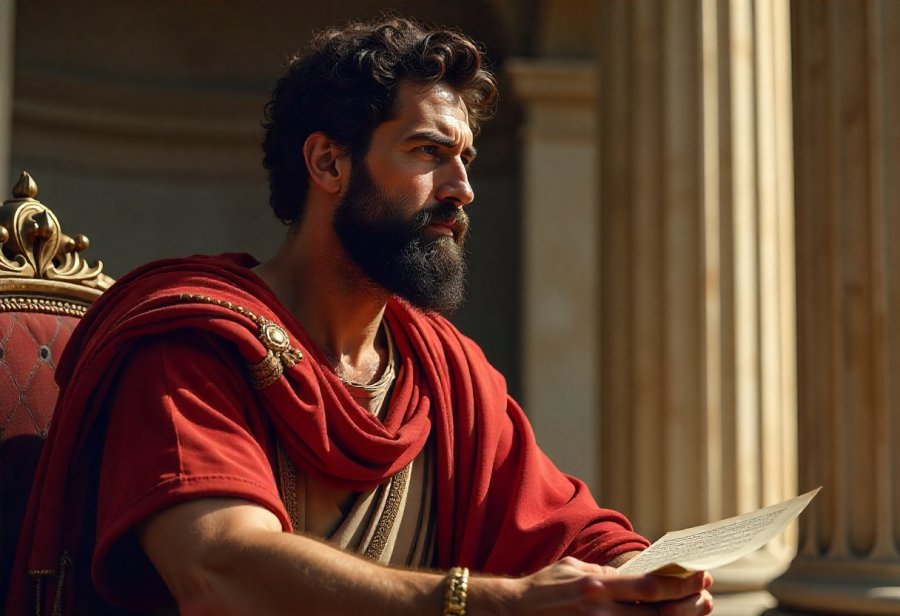
Leonardo da Vinci epitomizes the Renaissance ideal of the multifaceted genius, seamlessly blending art, science, and innovation. His notebooks reveal an insatiable curiosity that propelled groundbreaking ideas—from detailed anatomical studies to pioneering designs for flying machines centuries ahead of their time. While his masterpieces like Mona Lisa remain iconic, it is his scientific sketches and inventions that continue to inspire modern breakthroughs. Could his uncharted concepts hold the keys to future advancements in robotics, aerospace, or medical science? Today’s technology—AI, multispectral imaging, and digital modeling—offers unprecedented opportunities to decode and realize Leonardo’s visionary ideas. His holistic approach teaches us that true innovation lies at the intersection of disciplines and that curiosity-driven exploration can unlock the secrets to tomorrow’s breakthroughs. As we revisit his work with new tools, we are reminded that some of his most revolutionary ideas still await discovery—challenging us to push beyond current boundaries and imagine what’s possible.
Unlocking the Secrets of Leonardo da Vinci’s Multifaceted Genius
Leonardo da Vinci is widely celebrated as the ultimate Renaissance man, but his brilliance went far beyond his famous paintings. His notebooks reveal a restless mind driven by insatiable curiosity, exploring everything from anatomy and engineering to natural philosophy. While works like the Mona Lisa and The Last Supper remain iconic, they are just glimpses into a much broader universe of ideas and innovations. Leonardo’s genius lay in his ability to blend artistic mastery with scientific inquiry, creating a unique approach that challenged the boundaries of his time.
Born in Vinci, Italy, in 1452, Leonardo grew up in an environment that prized curiosity and experimentation. His work was characterized by a relentless desire to understand how things work, whether through detailed sketches of the human body or mechanical devices. This interdisciplinary approach set him apart from many of his contemporaries, allowing him to see connections others missed. His sketches and notes not only captured artistic beauty but also served as scientific tools, laying the groundwork for discoveries centuries ahead.
What makes Leonardo’s legacy especially compelling is the seamless integration of art and science in his work. His anatomical drawings are both scientifically precise and artistically stunning, revealing a deep understanding of the human form. Similarly, his engineering sketches—ranging from flying machines to war devices—combine technical insight with aesthetic finesse. This synthesis of disciplines fostered a way of thinking that encouraged innovation at the intersection of multiple fields, inspiring countless future explorers and inventors.
Leonardo’s ability to observe nature closely and translate those insights into visual form exemplifies his genius. His notebooks are filled with detailed studies of the natural world, revealing a mind that questioned everything and sought to unlock universal truths. His sketches of flying devices, water systems, and mechanical automata reflect a visionary seeking to push the limits of what was considered possible in his era. Many of these ideas were so ahead of their time that they remained unrealized during his lifetime, yet they continue to inspire modern science and engineering.
His approach reminds us that breakthroughs often start with bold questions and creative experimentation. Leonardo believed that progress emerges from curiosity-driven exploration, not just from accumulating knowledge but from connecting ideas across disciplines. Today’s innovators can draw inspiration from his method—breaking problems into smaller parts, observing meticulously, and refining ideas through iteration. His legacy encourages us to look beyond conventional boundaries and embrace the unknown as a space for discovery.
Revealing Leonardo’s Hidden Inventions: Visions of Flight and Future Tech
Leonardo da Vinci’s lesser-known inventions often seem like glimpses into a future that never quite arrived in his lifetime. His sketches include early designs for flying machines—some resembling modern gliders and helicopters—that predate the Wright brothers by centuries. These detailed concepts reveal a keen grasp of aerodynamics and mechanics, showcasing a visionary mind imagining flight long before it was possible. Today’s engineers look back at these sketches as foundational inspiration for drones and rotorcraft, bridging centuries of innovation.
Beyond flight, Leonardo envisioned a wide array of inventions in weaponry, automation, and exploration. His ideas included complex siege engines, robotic figures, and underwater exploration devices—many remaining theoretical. Yet, these concepts reflect a mind unbound by the technological limits of his era, daring to imagine solutions still being developed today. His sketches hint at scientific breakthroughs waiting to be rediscovered, blending art and engineering in ways that challenge our understanding of innovation.
Within his notebooks are anatomical drawings that are remarkably detailed, yet also contain symbols and annotations suggesting the presence of further discoveries. Some sketches resemble early prototypes of helicopters and mechanical automata, indicating he was thinking far ahead of his time. Modern technology, like multispectral imaging and AI, allows researchers to decode these sketches with new precision, uncovering insights that could influence biomechanics, robotics, and even medical science. These hidden ideas are blueprints of possibility, waiting for the right tools to bring them into reality.
Many of Leonardo’s uncharted inventions remain tantalizingly out of reach, but they continue to inspire scientific exploration. His sketches of flying devices, water systems, and automata challenge us to revisit and refine his visionary concepts with today’s innovations. Advanced imaging and AI help fill in gaps, transforming speculative sketches into actionable ideas. This ongoing process links his imagination with contemporary progress, demonstrating that innovation often begins with bold, untested visions.
Leonardo’s sketches contain symbolic language and artistic details that can obscure their technical meaning. With modern scientific methods, we’re beginning to decode these mysteries, combining art analysis with engineering principles. This interdisciplinary approach not only reveals Leonardo’s thought process but also opens pathways to adapt his ideas for today’s technological advances. His uncharted inventions stand as testament to his relentless curiosity, inviting us to explore what might still be possible when imagination meets science.
The Art-Science Synthesis: How Leonardo Transformed Innovation
Leonardo da Vinci exemplified the seamless fusion of art and science, demonstrating that creativity and inquiry are deeply interconnected. His mastery in painting, exemplified by works like the Mona Lisa, was rooted in a profound understanding of anatomy, light, and perspective. This curiosity about natural phenomena allowed him to depict human emotion and the environment with extraordinary realism, making his art both captivating and scientifically insightful. His sketches and studies reveal a mind that sought to understand the world at every level, blurring the lines between artistic expression and scientific investigation.
This integration of disciplines didn’t merely elevate his individual works; it fostered a new way of thinking about innovation itself. Leonardo believed that breakthroughs often happen at the intersection of different fields. His detailed anatomical drawings, for example, advanced medical knowledge while capturing the human form with remarkable precision. Similarly, his engineering sketches—ranging from flying devices to mechanical automata—merge technical insight with artistic finesse, inspiring future generations of inventors and engineers to see beyond traditional boundaries.
Leonardo’s approach was both meticulous and imaginative. He studied nature intimately—dissecting cadavers and observing birds in flight—then translated those insights into detailed sketches and notes. His iterative process—observe, sketch, refine—embodied a systematic mindset that remains relevant today. Through visual storytelling, he made complex scientific ideas accessible, fostering a cross-disciplinary dialogue that pushed the limits of what was known and understood.
His notebooks are a testament to relentless curiosity, revealing a holistic pursuit of knowledge. Whether exploring anatomy, natural phenomena, or mechanical systems, Leonardo dissected and documented with an artist’s eye for detail and a scientist’s desire for understanding. This synthesis of art and science created a powerful toolkit for innovation, encouraging others to see the world through a multifaceted lens.
Leonardo’s legacy shows that innovation flourishes when boundaries are broken. Viewing art and science as interconnected tools for understanding the world, he set a precedent that continues to inspire. His ability to bridge disciplines reminds us that curiosity and multidisciplinary thinking are essential for breakthroughs. Today’s innovators, inspired by his example, continue to explore the rich possibilities that emerge when creativity and inquiry unite.
Applying Leonardo’s Timeless Principles to Modern Innovation
Applying Leonardo da Vinci’s principles today means embracing a mindset rooted in curiosity and cross-disciplinary exploration. Modern innovators can learn from his approach of observing carefully, questioning assumptions, and experimenting without fear of failure. Instead of rushing to solutions, Leonardo broke down complex problems into manageable parts, studied each detail thoroughly, and refined his ideas through continuous iteration. This systematic yet creative process remains vital as we face today’s multifaceted challenges that demand fresh perspectives and innovative thinking.
Advances in technology now give us new tools to decode Leonardo’s sketches and ideas with unprecedented precision. Digital imaging, multispectral analysis, and artificial intelligence enable us to uncover hidden details and generate insights that were previously unreachable. These technologies help transform his unfulfilled concepts into tangible possibilities, inspiring new designs in fields like biomechanics, robotics, and aerospace. By revisiting his sketches through these lenses, we can accelerate innovation, turning visionary sketches into real-world breakthroughs.
Fostering a curiosity-driven culture is crucial. When teams approach problems with open minds, they challenge conventional wisdom and explore unconventional solutions. Leonardo’s example encourages questioning assumptions and embracing experimentation as a pathway to discovery. Cultivating this mindset in today’s research and development environments fuels resilience and adaptability, essential qualities in a rapidly evolving technological landscape.
Integrating art and science through visualization tools further enhances innovation. Leonardo’s ability to communicate complex ideas visually made his theories more accessible and inspiring. Today, 3D modeling, virtual reality, and simulation software enable us to bring scientific concepts to life, improving collaboration across disciplines. These tools make abstract ideas tangible, speeding up the process of testing and refining new ideas while engaging diverse teams in problem-solving.
Finally, applying Leonardo’s principles involves balancing visionary thinking with ethical responsibility. His relentless curiosity was driven by a genuine desire to improve the human condition. Modern innovators must similarly pursue breakthroughs that serve society ethically and sustainably. By combining bold exploration with a sense of purpose, we can honor Leonardo’s legacy—pushing boundaries while ensuring our advancements benefit humanity and protect our planet.
Scholars and Innovators Celebrate Leonardo’s Enduring Legacy
Scholars across disciplines see Leonardo da Vinci as a beacon of how curiosity and cross-disciplinary thinking drive innovation. Art historians emphasize how his mastery in painting and detailed anatomical studies laid the groundwork for both modern art and medicine. His seamless blend of artistic skill and scientific inquiry created a new standard for understanding the human body and the natural world, inspiring subsequent generations in multiple fields.
Engineers and scientists highlight how Leonardo’s sketches of flying machines and mechanical devices served as early blueprints for aerospace and robotics. Many of his visionary designs, often centuries ahead of their time, challenge current technological limits and continue to spark new breakthroughs. His holistic approach—integrating art, engineering, and natural science—remains a powerful model for today’s innovators seeking disruptive ideas.
Recent technological advances have enabled researchers to decode Leonardo’s notebooks with unprecedented detail. Using tools like multispectral imaging and AI, they uncover insights that were once hidden or misunderstood. These efforts show that Leonardo’s ideas are not relics but active sources of inspiration, capable of influencing future scientific progress in fields ranging from biomechanics to artificial intelligence.
Experts also admire Leonardo’s systematic yet creative process—meticulously observing nature, refining sketches, and iterating on concepts. This disciplined curiosity encourages modern researchers to question assumptions, embrace experimentation, and remain resilient amid setbacks. His approach exemplifies how persistent inquiry and open-mindedness lead to breakthroughs, even decades or centuries later.
Furthermore, Leonardo’s legacy underscores the importance of interdisciplinary collaboration. Bringing together specialists from art, science, and engineering can spark ideas no single field could produce alone. His work demonstrates that crossing boundaries often results in the most innovative solutions, a principle that continues to shape contemporary research environments.
Many professionals recognize that Leonardo’s curiosity was driven by a genuine desire to improve the human condition. Today’s scientists and innovators are inspired to pursue breakthroughs with purpose and responsibility, ensuring technological advancements serve society ethically and sustainably. His example reminds us that progress thrives when driven by passion, integrity, and a relentless quest for understanding.
Leonardo’s influence endures because he exemplifies a mindset of boundless curiosity and integrated thinking. His work encourages us to look beyond traditional silos, to explore the interconnectedness of disciplines, and to see challenges as opportunities for discovery. As new tools help unlock the secrets of his notebooks, his legacy continues to inspire a new wave of explorers committed to shaping a better future.
Carrying Forward Leonardo’s Spirit: Future Paths and Discoveries
Leonardo da Vinci’s legacy continues to inspire us, reminding us that curiosity and cross-disciplinary thinking are powerful drivers of progress. As we reflect on his life and groundbreaking work, it becomes clear that unlocking the secrets hidden within his sketches and uncharted inventions holds tremendous potential. Advanced technologies like AI, multispectral imaging, and digital modeling now give us new eyes to explore his ideas—some of which were centuries ahead of their time. These tools can transform his visionary sketches into practical innovations, bridging the gap between imagination and reality.
His approach to blending art with science remains profoundly relevant today. Leonardo showed us that creative curiosity combined with meticulous observation can lead to solutions that push beyond current boundaries. By embracing his method—breaking complex problems into manageable parts, questioning assumptions, and iterating on ideas—we open pathways to breakthroughs that might otherwise stay buried in the past. His blueprint for discovery encourages us to be bold and inquisitive as we face modern challenges.
Many of Leonardo’s unrecorded ideas are blueprints of possibility, waiting to be rediscovered and refined. Some sketches hint at early concepts of flight, robotics, or hydraulic systems that could still influence tomorrow’s technology. As new tools help decode and interpret his work, we have the chance to turn these visions into real-world innovations, inspiring future engineers and scientists to think bigger.
His inventions, though never fully realized in his lifetime, serve as a reminder that innovation often begins with bold imagination. Revisiting his sketches with today’s technology allows us to transform dreams into practical solutions, shaping a future inspired by his fearless pursuit of knowledge. These hidden ideas challenge us to look beyond the obvious and explore what might still be possible.
Leonardo’s work exemplifies that progress is rooted in curiosity, experimentation, and the willingness to cross disciplinary lines. His relentless drive to understand the natural world continues to guide us in tackling complex problems with fresh perspectives. By staying true to his spirit of exploration, we can foster innovations that benefit society and push the boundaries of human achievement.
Looking ahead, the integration of emerging technologies with Leonardo’s principles offers exciting opportunities. AI-driven analysis, virtual reality, and advanced simulations can accelerate discovery, making his uncharted ideas more accessible and actionable. Pairing these tools with a mindset rooted in ethical responsibility ensures that our pursuit of progress remains aligned with societal needs.
His secrets are still unfolding, and each new discovery reinforces the importance of curiosity and multidisciplinary thinking. Leonardo’s example encourages us to remain open-minded, question assumptions, and pursue knowledge relentlessly. As we continue to explore and apply his insights, we carry forward a legacy that transforms imagination into innovation—shaping a future inspired by the relentless pursuit of understanding.